

The right landscape lighting can turn a dark walkway into a welcoming entrance and give your garden a whole new look after sunset. But with so many solar lights, low voltage systems, and premium fixtures to choose from, finding the best outdoor landscape lighting means looking beyond price and brightness.
We’ll break down what each pick offers, where it fits best, and what to consider before buying—including power source, light output, installation, and maintenance—so you can choose lighting that suits both your home and your budget.
Compare 8 Outdoor Landscape Lighting Options
Explore these outdoor landscape lighting options, compare their key features, and find the right lighting solution for your garden, pathway, patio, or outdoor space.
| Product | Image | Key Features | Applications | Shop |
|---|---|---|---|---|
| 1. Outdoor LED Spotlights | 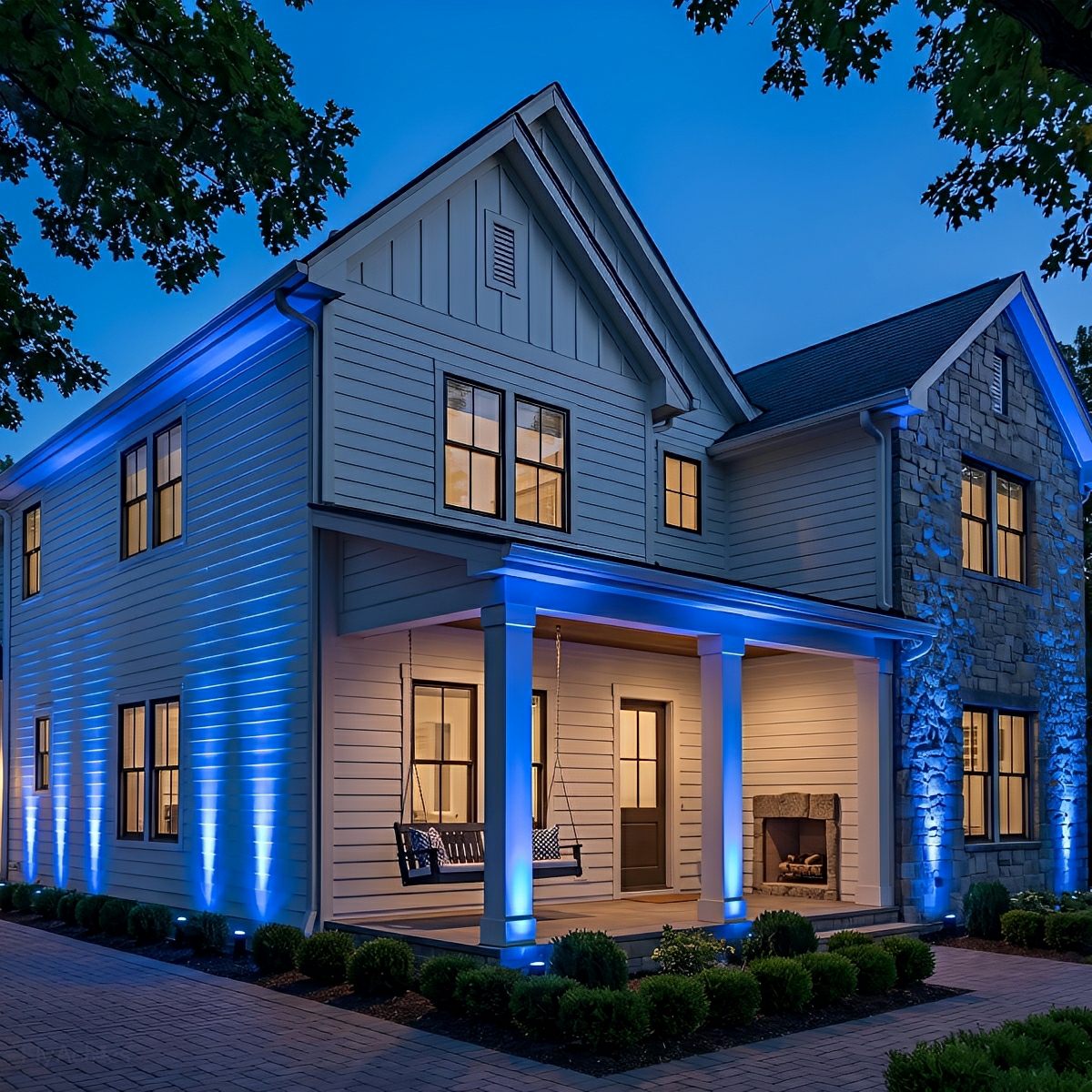 |
• IP65 waterproof rating • Aluminum + tempered glass • 3000K / 6000K / 2000K • 10W / 24W / 27W options |
Gardens, lawns, villas, architectural accents | Check Price |
| 2. 24V Low Voltage Landscape Light | 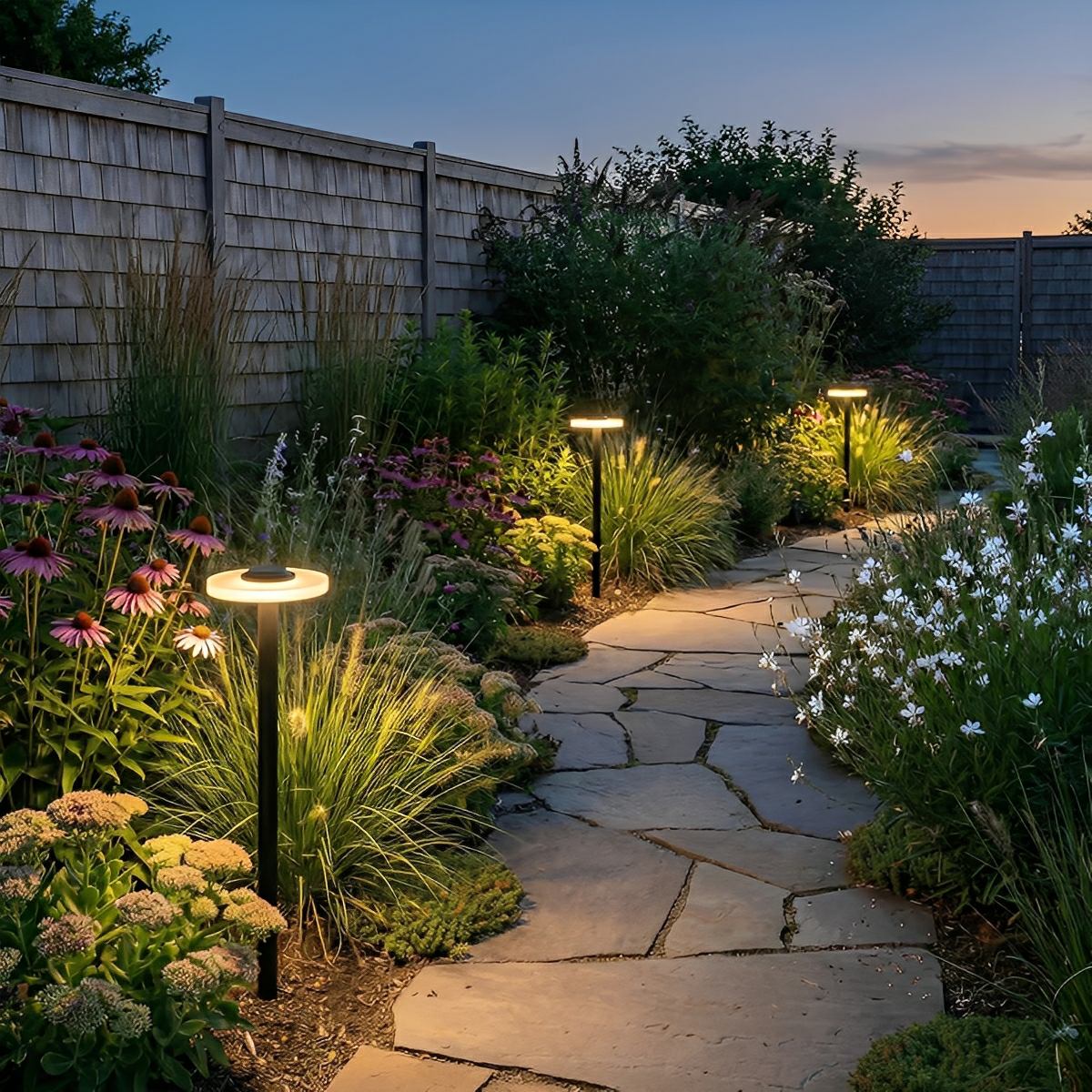 |
• DC 24V low voltage • IP65 waterproof rating • 6W LED power • 3000K warm white • 50,000-hour lamp life |
Gardens, yards, patios, villas | Check Price |
| 3. Rectangular LED Path Lights |  |
• IP65 waterproof rating • Stainless steel + acrylic • 485 lumens • 3000K warm white • Three height options |
Walkways, gardens, parks, villa entrances | Check Price |
| 4. RGB LED Landscape Spotlights | 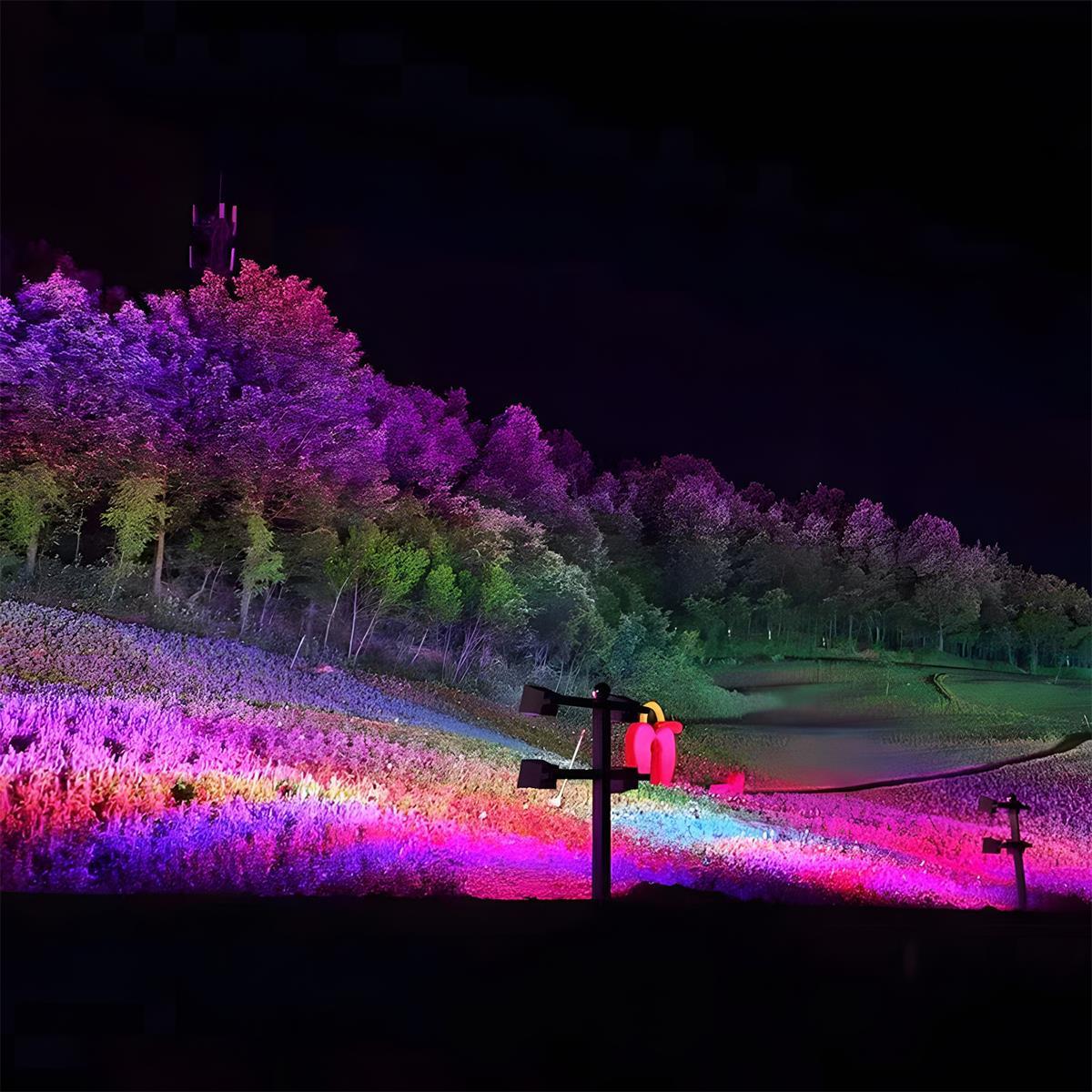 |
• RGB colorful lighting • IP65 waterproof rating • Die-cast aluminum + tempered glass • 30W / 50W / 72W • 50,000-hour lamp life |
Tree lighting, gardens, patios, landscape accents | Check Price |
| 5. Tiered Cylinder Landscape Lights | 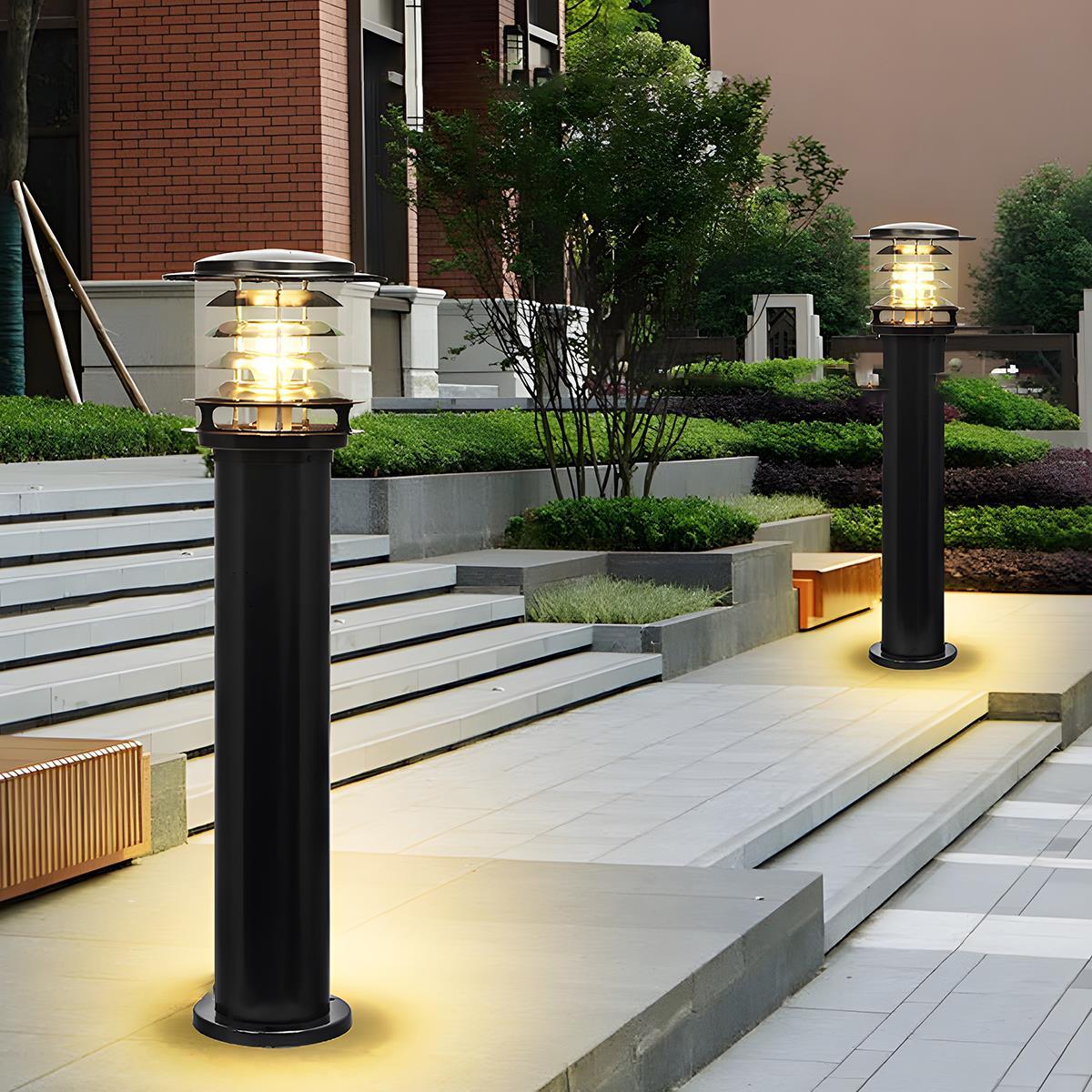 |
• IP65 waterproof rating • Die-cast aluminum + PC • Black / brushed brass • 12W hardwired / 7W solar • 50,000-hour lamp life |
Home entrances, gardens, walkways, patios | Check Price |
| 6. Minimalist Solar Pathway Lights |  |
• IP54 waterproof rating • Die-cast aluminum + acrylic • Solar / hardwired options • Three color temperatures (solar) • Three height options |
Gardens, backyards, parks, fences, pathways | Check Price |
| 7. Round LED In-Ground Lights | 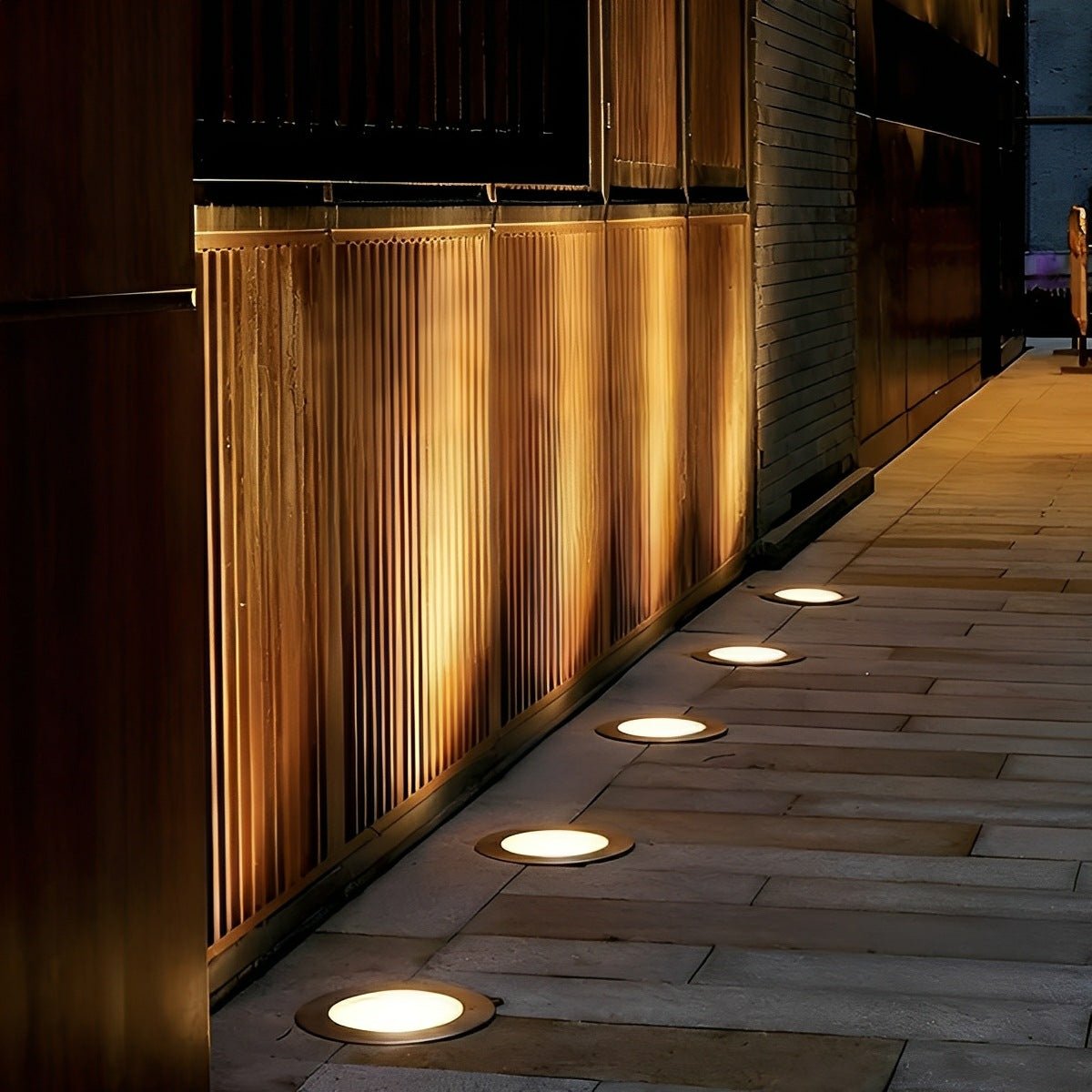 |
• IP65 waterproof rating • 18W LED, 1800 lumens • Stainless steel + tempered glass • 3000K / 6000K / 2000K • 50,000-hour lamp life |
Gardens, lawns, patios, pathways | Check Price |
| 8. RGB Solar Floating Pool Lights |  |
• IP67 waterproof rating • 16 RGB colors • 4 color-changing modes • 8 brightness levels • Solar panel + 2000mAh battery |
Swimming pools, ponds, floating water features | Check Price |
Note: Product specifications and available configurations may vary by model. Please refer to each product page for the latest details.
1. Best Landscape Spotlights: Round Waterproof Outdoor LED Spot Lights
For a lighting plan built around selected focal points, these outdoor LED spotlights offer several housing shapes and wattages. Their industrial styling makes them a candidate for highlighting garden features, textured exterior surfaces, or architectural details.
The collection includes 10W round models, a 24W square model, and a larger 27W round model. Warm white, cool white, and yellow options let you coordinate the light appearance with your outdoor setting. Some variants also list additional colors, so review the exact configuration before ordering.
These are hardwired 110–240V fixtures, not standard 12V landscape lights. Include the electrical installation in your project budget rather than assuming they connect to an existing low voltage transformer.
Pros
- Several shapes and wattages for different installation locations.
- Aluminum housing and tempered glass construction.
- Warm white, cool white, and yellow options.
- Published IP65 protection rating.
Cons
- Not directly compatible with a typical 12V landscape lighting circuit.
- The listing gives conflicting beam-angle values; confirm the distribution for your chosen model.
- The published 100-lumen figure is not clearly broken down by wattage or variant.
Specifications
- Light source: LED.
- Power: Round A, B, and C: 10W; square: 24W; Round D: 27W.
- Input voltage: 110–240V.
- Power connection: Hardwired.
- Materials: Aluminum and tempered glass.
- Standard color options: 3000K warm white, 6000K cool white, and 2000K yellow.
- Protection rating: IP65.
- Listed color rendering index: 90.
- Round A dimensions: 4.13 × 4.13 × 7.17 inches.
- Round B dimensions: 3.15 × 3.15 × 6.02 inches.
- Round C dimensions: 4.17 × 4.17 × 6.22 inches.
- Round D dimensions: 6.10 × 6.10 × 7.64 inches.
- Square dimensions: 5.91 × 5.91 × 6.30 inches.
Best fit: Homeowners looking for hardwired accent lighting with a choice of fixture shapes and light colors.
2. Best Low Voltage Garden Lighting: 24V Waterproof Dish LED Landscape Light
This dish-shaped garden light is the low voltage option in the selection. Its black aluminum body, acrylic diffuser, and 3000K LED light make it a candidate for modern planting beds, garden borders, and paths where you want a coordinated series of fixtures.
Each light is rated at 6W and requires a compatible 24V DC power supply. The seller lists single and multipack options, along with screw-mounted and in-ground base selections. These choices can help you build a matching layout, but they do not make the product a complete ready-to-install lighting system.
The required power equipment is sold separately. Confirm that the supply delivers the specified DC output, and include suitable cable and connectors in the installation plan.
Pros
- 24V DC operation for a compatible low voltage installation.
- 6W rated consumption per fixture.
- 3000K warm-white light.
- Single and multipack options.
- Choice of screw-mounted or in-ground base configuration.
Cons
- The required transformer or compatible DC power supply is not included.
- Not a complete kit with all wiring and installation components.
- Not directly interchangeable with fixtures on a 12V system.
- Lumen output is not specified in the supplied product details.
Specifications
- Light source: LED.
- Power: 6W per fixture.
- Operating voltage: 24V DC.
- Connection: Wired to a compatible low voltage power supply.
- Power supply included: No.
- Color temperature: 3000K warm white.
- Materials: Aluminum and acrylic.
- Finish: Black.
- Protection rating: IP65.
- Listed color rendering index: Greater than 80.
- Manufacturer-listed LED lifespan: 50,000 hours.
- Dimensions: 5.12-inch diameter × 23.62-inch height.
- Listed weight: 6.61 pounds.
Best fit: A planned 24V DC garden lighting installation where you are selecting the power supply and wiring separately.
3. Best LED Landscape Path Lights: Modern Rectangular Outdoor LED Lights
These rectangular LED path lights suit a landscape with clean architectural lines. Their narrow upright profile provides a different visual approach from traditional mushroom-style path lights, making them worth considering beside modern walkways, patios, and courtyards.
The current product listing specifies a 7W LED light source, 695 lumens, and 3000K warm-white illumination. The body is listed as die-cast aluminum and acrylic with a gray-black finish.
Installation is surface-mounted rather than a simple push-in stake arrangement. The seller specifies a concrete base for lawn or landscaped-area installations, so plan the mounting surface before ordering multiple fixtures.
Pros
- Published output of 695 lumens at 7W.
- 3000K warm-white illumination.
- Slim rectangular styling for contemporary outdoor spaces.
- Single and multipack purchase options.
- Published IP65 protection rating.
Cons
- Requires a secure mounting surface, with a concrete base specified for landscaped areas.
- Listed for hardwired line voltage rather than a standard low voltage lighting system.
- The current listing specifies hardwired operation; do not assume a solar version is included.
Specifications
- Light source: LED.
- Power: 7W.
- Listed light output: 695 lumens.
- Color temperature: 3000K warm white.
- Input voltage: 85–265V.
- Power connection: Hardwired.
- Materials: Die-cast aluminum and acrylic.
- Finish: Gray black.
- Protection rating: IP65.
- Listed color rendering index: Greater than 85.
- Installation: Surface-mounted.
- Dimensions: 3.94 × 2.36 × 31.50 inches.
- Listed weight: 8.82 pounds.
Best fit: Contemporary paths and courtyards where a fixed, surface-mounted fixture suits the design.
4. Best Hardwired Landscape Lighting for Colorful Accents: RGB LED Tree Spotlight
This RGB LED spotlight is designed for a more expressive landscape than a conventional warm-white path lighting scheme. Consider it for colorful tree accents, seasonal displays, or selected garden features where the lighting effect is intended to stand out.
The collection offers 30W, 50W, and 72W models with hardwired and plug-in variants. Die-cast aluminum and tempered glass construction give it an industrial appearance, while the listed IP65 rating addresses outdoor exposure within the product’s installation requirements.
Choose the power connection deliberately. A plug-in version and a hardwired version are different purchase options, and neither should be assumed to connect to a 12V landscape transformer.
Pros
- RGB lighting for colorful outdoor accents.
- Three wattage options.
- Choice of hardwired or plug-in configurations.
- Die-cast aluminum and tempered glass construction.
- A 10-foot cord is listed for the plug-in version.
Cons
- Uses more power than the smaller path lights in this selection.
- Colorful accent lighting is not a substitute for dedicated route or task lighting.
- Control functions and any white-light mode should be confirmed for the selected variant.
- Lumen output is not clearly specified in the product details.
Specifications
- Light source: RGB LED.
- Power options: 30W, 50W, and 72W.
- Input voltage: 110–220V.
- Connection options: Hardwired or plug-in.
- Plug-in cord length: 10 feet.
- Materials: Die-cast aluminum and tempered glass.
- Finish: Gray.
- Protection rating: IP65.
- Manufacturer-listed LED lifespan: 50,000 hours.
- 30W dimensions: 6.38 × 6.38 × 11.42 inches.
- 50W and 72W listed dimensions: 8.46 × 8.46 × 11.42 inches.
- Listed weight: 6.31 pounds for 30W; 9.30 pounds for larger models.
Best fit: Homeowners seeking colorful tree and garden accents rather than understated everyday pathway lighting.
5. Best Outdoor Landscape Lights for House Entrances: Cylinder Tiered LED Lights
The tiered cylindrical design makes this fixture a candidate for front walks, entry gardens, and patio borders where the light also acts as a visible design element during the day.
Black and brushed-brass finish options provide different ways to coordinate with exterior hardware and planting. Multiple heights let you compare a lower-profile installation with taller posts that remain more visible above surrounding plants.
Solar and hardwired versions have different features. The hardwired model lists replaceable E27 LED bulbs, a 3000K light color, and wall-switch operation without dimming. The solar version lists remote-control dimming and three color-temperature modes.
Pros
- Two finishes and several height options.
- Replaceable E27 LED bulbs in the hardwired version.
- Solar and hardwired purchase options.
- Remote dimming and three white-light modes listed for the solar version.
- Published IP65 protection rating.
Cons
- The hardwired version is listed as non-dimmable.
- Surface mounting requires base preparation; the seller specifies concrete for landscaped areas.
- Power figures vary between supplied materials and the current listing, so confirm wattage for the selected model.
- Solar and hardwired features should not be treated as interchangeable.
Specifications
- Materials: Die-cast aluminum and polycarbonate.
- Finish options: Black or brushed brass.
- Power options: Solar or hardwired.
- Hardwired light source: Replaceable E27 LED bulb.
- Hardwired color temperature: 3000K warm white.
- Solar color modes: 3000K, 4500K, and 6000K.
- Controls: Wall switch for hardwired; remote control for solar.
- Dimming: Solar version only, as listed.
- Listed hardwired input voltage: 110–240V.
- Protection rating: IP65.
- Installation: Surface-mounted.
- Height options: Approximately 11.81, 23.62, and 31.50 inches.
- Body dimensions vary by selected size and power-source configuration.
Best fit: Front gardens and house approaches where matching finishes, height choices, and a decorative post shape are priorities.
6. Best Solar Landscape Path Lights: Minimalist Rectangle Hollow Post Light
This hollow rectangular post light offers a geometric alternative to traditional solar path lights. Its black frame and open silhouette suit modern garden borders, patios, and paths where fixture appearance is part of the overall design.
Choose the solar variant if avoiding a permanent electrical supply cable is your priority. That version lists 3000K, 4500K, and 6000K color-temperature modes. A separate hardwired version is also available with 3000K warm-white light.
Unlike lightweight stake-in solar lights, this fixture is surface-mounted. The seller specifies a concrete base for lawn and landscaped installations. Include that preparation when comparing cost and installation effort.
Pros
- Solar option avoids a permanent electrical supply cable to the fixture.
- Three listed white-light modes for the solar version.
- Three height options.
- Die-cast aluminum and acrylic construction.
- Single and multipack options for coordinated layouts.
Cons
- Battery capacity, charging time, and runtime are not detailed in the main specification table.
- Lumen output is not listed.
- Surface-mounted installation still requires groundwork.
- The listed IP54 rating should not be confused with immersion suitability.
Specifications
- Light source: LED.
- Materials: Die-cast aluminum and acrylic.
- Finish: Black.
- Power options: Solar or hardwired; select the intended version.
- Solar color modes: 3000K, 4500K, and 6000K.
- Hardwired color temperature: 3000K warm white.
- Listed hardwired input voltage: 85–265V.
- Protection rating: IP54.
- Installation: Surface-mounted.
- Width and depth: 5.90 × 5.90 inches.
- Height options: 7.90, 15.70, and 23.60 inches.
- Listed weights: 3.31, 4.41, and 5.51 pounds, respectively.
Best fit: A modern outdoor space where you want a substantial solar post light and can provide an appropriate mounting base and charging location.
7. Best In-Ground Landscape Lighting: Round LED In-Ground Wall Washer
This round in-ground fixture is worth considering when you want the lighting hardware to remain visually discreet. The recessed format can suit selected architectural or landscape accents where an above-ground post would interrupt the design.
The product lists an 18W LED light source and 1,800 lumens, with warm-white, cool-white, and yellow purchase options. Treat those as separate selections unless the seller confirms that a particular model allows adjustment after installation.
Installation planning is especially important for a recessed fixture. Ask for the cutout dimensions, drainage requirements, and permitted load exposure before preparing the site. Do not assume that a fixture marketed for landscape use is approved for vehicle traffic or standing water.
Pros
- Recessed design reduces visible above-ground hardware.
- Published output of 1,800 lumens.
- Stainless steel, tempered glass, and polycarbonate construction.
- Three listed light-color options.
- Single and multipack purchase options.
Cons
- Requires excavation and a suitable recessed installation detail.
- Drainage and maintenance access need advance planning.
- The listing does not establish a vehicle load rating.
- The specification gives overall dimensions, not a confirmed cutout size.
Specifications
- Light source: LED.
- Power: 18W.
- Listed light output: 1,800 lumens.
- Listed efficacy: 100 lumens per watt.
- Input voltage: 110–220V.
- Power connection: Hardwired.
- Materials: Stainless steel, tempered glass, and polycarbonate.
- Finish: Silver.
- Color options: 3000K warm white, 6000K cool white, and 2000K yellow.
- Protection rating: IP65.
- Listed color rendering index: 90.
- Manufacturer-listed LED lifespan: 50,000 hours.
- Overall dimensions: 7.87-inch diameter × 4.33-inch height.
- Listed weight: 2.20 pounds.
Best fit: Planned recessed accent lighting where drainage, electrical connections, and installation depth can be addressed properly.
8. Best Decorative Solar Floating Lights: Round RGB Pool and Pond Light
For a decorative addition to a pool or pond, this round solar floating light offers a different effect from fixed landscape fixtures. Its illuminated body becomes part of the scene rather than simply directing a beam toward another feature.
The product lists 16 colors, four automatic color-changing modes, and eight brightness levels, with remote-control operation and automatic nighttime activation. Two diameter options let you compare a smaller accent with a larger floating feature.
The seller lists approximately 10 hours of charging and 8–10 hours of operation. Treat those as stated estimates rather than guaranteed nightly performance; charging conditions and the selected operating mode should be considered before purchase.
Pros
- Solar operation without a permanent electrical supply cable.
- 16 colors and four automatic color-changing modes.
- Eight listed brightness levels.
- Remote-control operation.
- Two size options and multipack choices.
Cons
- Decorative illumination is not a substitute for pool safety or pathway lighting.
- Charging time may limit usefulness where sunlight is restricted.
- Runtime estimates are not a guarantee under every setting or weather condition.
- Battery replacement details are not specified in the main product table.
Specifications
- Light source: RGB LED.
- Rated power: 2.5W.
- Power source: Solar-charged battery.
- Colors: 16.
- Automatic color-changing modes: 4.
- Brightness levels: 8.
- Controls: Remote control and automatic nighttime activation, as listed.
- Materials: PE shell, ABS holder, and monocrystalline silicon solar panel.
- Solar panel: 5V, 1.1W, 113mm.
- Battery: 3.7V, 2,000mAh.
- Protection rating: IP67.
- Seller-stated charging time: Approximately 10 hours.
- Seller-stated runtime: Approximately 8–10 hours.
- Listed dimensions: 9.80 or 12.60 inches in diameter × 2.60 inches high.
- Size selector labels: Approximately 10 or 13 inches.
- Listed weight: 1.10 pounds.
Best fit: Decorative color around a suitable pool or pond, used alongside any required functional and safety lighting.
Which Landscape Light Should You Choose?
Start with the installation rather than the appearance alone. The 24V dish light is the option to evaluate for a compatible low voltage garden system. The rectangular path light and tiered cylinder light suit fixed installations where the fixture itself contributes to the design. For stronger visual accents, compare the standard spotlights, RGB tree light, and recessed in-ground fixture.
If avoiding a permanent power cable is the priority, consider the solar rectangular post light or the decorative floating light. Before purchasing any solar model, confirm that its charging requirements and documented output suit the location.
Specifications and available variants may change. Confirm the selected model’s voltage, included components, dimensions, controls, mounting requirements, and current price on the product page before ordering. Manufacturer-listed lifespan and runtime figures are estimates, not guarantees of service life or nightly performance.
How to Choose the Best Outdoor Landscape Lighting?
The best outdoor landscape lighting is not simply the brightest fixture or the largest kit. It is a system that puts the right amount of light in the right places, works with your property’s electrical setup, and remains practical to maintain.
For a permanent residential installation, a low voltage LED system is a strong starting point. It combines efficient light sources with a transformer, outdoor cable, and fixtures selected for individual landscape features. Solar lighting offers a simpler alternative where running cable is impractical, while line voltage lighting serves different installation requirements.
This guide explains how to compare landscape lighting systems, choose fixtures, size a transformer, and create a balanced nighttime design without overlighting your yard.
1. Start With Your Landscape, Not a Lighting Kit
Before comparing products, identify what you want to see and do outside after sunset. A useful lighting plan separates your yard into three priorities:
- Movement: Paths, entrances, steps, and transitions between surfaces.
- Outdoor living: Patios, decks, seating areas, and dining spaces.
- Visual interest: Trees, planting beds, textured walls, and selected architectural features.
Every proposed light should have a clear purpose. Good landscape lighting is useful, targeted, no brighter than necessary, and controlled so that it operates when needed. Darkness is part of the design, not a problem that must be eliminated everywhere.
Build a Simple Lighting Map
Sketch your house, walkways, planting beds, and outdoor living areas. Mark potential fixture locations and the features they will illuminate.
Also note:
- Existing outdoor power sources.
- Possible transformer locations.
- Cable routes and approximate run lengths.
- Areas where digging would be difficult.
- Shaded locations that may limit solar charging.
- Views from windows, seating areas, and neighboring properties.
For wired landscape lighting, cable length and the wattage connected to each run affect electrical planning. A kit that includes enough fixtures may still lack enough cable—or the appropriate cable size—for your property.
2. Understand Power Source, Voltage, and Light Source
Terms such as solar, LED, plug-in, and low voltage describe different parts of a lighting system. Understanding those differences makes product comparisons more useful.
| Category | What It Describes | Common Examples |
|---|---|---|
| Power source | Where the system gets energy | Utility electricity, solar charging, replaceable batteries |
| Connection method | How the system connects to its supply | Plug-in or hardwired |
| Operating voltage | The electrical supply required by the fixture | Low voltage or line voltage |
| Light source | The technology producing illumination | LED or halogen |
For example, an LED landscape light can operate at low voltage and receive power from a transformer that plugs into household electricity. Solar landscape lights can also use LEDs. This is why comparing LED versus solar alone can be misleading.
Solar Landscape Lighting
Solar lights use sunlight to charge batteries that power the fixtures after dark. They are worth considering when avoiding cable installation is a priority.
When comparing solar landscape lights, check:
- Light output at the intended operating setting.
- Stated runtime and the charging conditions behind that claim.
- Solar panel placement requirements.
- Whether the battery is replaceable.
- Whether the solar panel is integrated or separate.
- Availability of replacement components.
Do not assume every solar fixture will provide the same brightness or all-night operation. Match the product’s documented performance to the application, especially where consistent illumination matters.
Battery-Powered Landscape Lighting
Battery-powered fixtures may suit portable, occasional, or seasonal lighting without permanent wiring.
Compare battery type, expected runtime at your preferred brightness, outdoor suitability, and replacement cost. Use the product’s instructions as the basis for maintenance planning rather than assuming a standard battery lifespan.
Plug-In Landscape Lighting
Plug-in describes the connection to the power supply, not necessarily the voltage at the fixtures.
A low voltage transformer may plug into household power and supply a separate low voltage lighting circuit. When reviewing a plug-in kit, check both the transformer’s input requirements and the fixtures’ operating requirements.
Hardwired Landscape Lighting
Hardwired does not automatically mean that every fixture operates at line voltage. A system may use a permanently connected transformer, line voltage fixtures, or another arrangement.
Review the complete installation requirements rather than choosing a system based on the word wired alone. Have a qualified electrician assess new household electrical work and applicable local requirements.
3. Choose Between Low Voltage and Line Voltage
Low voltage landscape lighting is a useful starting point for residential gardens because a coordinated system can serve paths, planting beds, trees, and architectural accents.
A typical residential low voltage system uses a transformer to convert household power into the supply required by compatible fixtures. However, not every outdoor fixture uses the same voltage or type of current.
Before purchasing, verify:
- The fixture’s required operating voltage.
- Whether it requires AC or DC power.
- The compatible transformer or driver type.
- Any dimming or controller restrictions.
- Suitability for the intended outdoor location.
A fixture labeled 12V should not be treated as universally compatible with every 12V power supply.
For line voltage lighting, evaluate installation and wiring requirements separately. Higher supply voltage does not automatically create a better lighting result. Beam distribution, shielding, output, and placement remain essential.
4. Choose the Right Landscape Lighting Transformer
The transformer is the power hub of a low voltage landscape lighting system. Selecting it requires more than matching a wattage label.
Consider the total connected load, future expansion, cable runs, compatible output, and control options. Follow the loading limits and installation instructions for the specific transformer you purchase.
Calculate the Total Fixture Load
Add the actual wattage of every planned fixture. Use actual power consumption, not an incandescent-equivalent wattage printed for brightness comparison.
| Fixture Group | Quantity | Wattage per Fixture | Total |
|---|---|---|---|
| Path lights | 8 | 4W | 32W |
| Tree spotlights | 4 | 7W | 28W |
| Wall accent lights | 2 | 5W | 10W |
| Step lights | 5 | 2W | 10W |
| Total connected load | 19 fixtures | 80W | |
Allow Appropriate Capacity
A common planning approach is to keep the connected lighting load at or below 80% of the transformer’s rated capacity, where consistent with the manufacturer’s instructions.
Using that approach:
Minimum transformer capacity = Total fixture wattage ÷ 0.80
For an 80W lighting load:
80W ÷ 0.80 = 100W
A 100W transformer meets that planning threshold. If you expect substantial expansion, compare a larger compatible model rather than buying only for the initial layout.
For a 200W fixture load, the same calculation gives a minimum capacity of 250W.
Understand What 25% Extra Capacity Means
Choosing a transformer rated 25% above the connected load is mathematically equivalent to loading it to 80% of its capacity.
However, this does not mean you should automatically buy the largest transformer available. Choose a suitable model based on manufacturer instructions, anticipated additions, and circuit arrangement.
A Larger Transformer Does Not Constantly Use Its Full Rating
A transformer’s wattage rating describes capacity, not a constant electricity draw equal to that number. Actual consumption depends on the connected lighting load and power-supply losses.
Oversizing may increase purchase cost, but unused rated capacity should not be confused with continuous electricity consumption.
Separate Transformer Capacity From Voltage Drop
Transformer overload and cable voltage drop are different problems.
Voltage drop occurs along the cable run. Cable length, conductor size, connected load, and connections affect the voltage delivered to fixtures.
A larger transformer alone does not replace proper cable sizing or circuit planning. Multi-tap transformers can provide different output terminals for appropriate voltage compensation, but the voltage reaching each fixture must remain within its permitted operating range.
Compare Transformer Features
- Compatible output voltage and current type.
- Sufficient capacity for the connected load.
- Suitable terminals and circuit arrangements.
- Timer and photocell compatibility.
- Accessible cable connections.
- Outdoor enclosure suitability.
- Overload and thermal protection.
- Clear installation instructions and available replacement controls.
5. Match Landscape Lighting Fixtures to Their Jobs
The best landscape lighting fixtures are not interchangeable. Path lights, spotlights, wall-wash fixtures, and recessed lights distribute illumination differently.
Choose the lighting effect first, then select the fixture.
Pathway Landscape Lights
Landscape pathway lights should make the walking surface and important transitions visible without placing exposed light sources in normal sightlines.
Look for downward-directed distribution and shielding that limits glare. Avoid treating a fixed spacing recommendation, such as every 10 to 15 feet, as suitable for every fixture and walkway.
Use manufacturer distribution information and a nighttime mock-up to decide spacing. Check:
- Whether dark gaps remain at bends or steps.
- Whether fixtures shine into viewers’ eyes.
- Whether the path is readable from both directions.
- Whether growing plants will obstruct the light.
The objective is a visible route, not necessarily a continuous row of equally spaced fixtures.
Landscape Spotlights and Accent Lights
Spotlights create focal points by directing illumination toward selected features, such as a specimen tree, sculpture, or architectural detail.
When comparing landscape spotlights, review:
- Beam spread.
- Light output.
- Aiming adjustment.
- Glare shields.
- Mounting options.
- Compatibility with replacement lamps or accessories.
For a tall, narrow feature, evaluate a narrower beam. For a broad canopy or wall, consider wider coverage or multiple carefully aimed fixtures.
Test the result on the actual feature before finalizing the layout. A brighter fixture is not automatically a better match.
Uplighting for Trees and Architectural Features
Uplighting can emphasize a trunk, canopy, column, or textured wall. However, it can also send unnecessary light beyond the target.
Where uplighting is used, contain the beam as much as possible, reduce output to an appropriate level, and avoid aiming into open sky or neighboring windows.
There is no single correct distance between every uplight and every tree. Trunk width, canopy shape, beam spread, and viewing position should determine placement.
In-Ground and Well Lights
Recessed fixtures may be useful where a visible stake-mounted fixture would interrupt the design.
Before choosing one, check the manufacturer’s requirements for drainage, installation depth, load exposure, and maintenance access. An outdoor rating alone does not establish suitability for every ground-level condition.
Deck, Patio, and Hardscape Lighting
Outdoor living areas benefit from separating different lighting jobs:
- Step lighting for changes in elevation.
- Subtle perimeter lighting for orientation.
- Task lighting where activities require it.
- Decorative lighting for atmosphere.
Avoid relying on one bright source to do everything. Layered, targeted illumination can create a more comfortable setting than a single floodlight directed across the entire space.
Floating and Submersible Lights
Treat water-feature lighting as a separate product category.
Confirm that the fixture and its power equipment are explicitly approved for the intended pond, fountain, pool, or other water application. Do not assume that waterproof, outdoor, or a general ingress-protection claim authorizes every type of submersion.
Keep Unrelated Products Out of the Lighting Plan
Electric insect traps and similar pest-control devices serve a different purpose from landscape illumination. Evaluate them separately rather than counting them as substitutes for path, accent, or outdoor living lights.
6. Compare LED, Halogen, and Solar Systems Correctly
LED and halogen describe light sources. Solar describes an energy source. A clearer comparison is wired LED, wired halogen, and solar LED.
| System | Main Reason to Consider It | Main Buying Question |
|---|---|---|
| Wired LED | Efficient permanent lighting with varied optics and controls | Are the fixtures, transformer, cable, and controls compatible? |
| Wired halogen | Maintaining an existing compatible system | Does retaining it make sense compared with an LED upgrade? |
| Solar LED | Avoiding permanent power cable installation | Will the stated charging conditions, output, and runtime meet the application? |
LED lighting offers efficiency, directional control, and options for different light distributions. Solar lighting can avoid additional household electricity use, but its usefulness still depends on product performance and charging conditions.
Avoid Universal Lifespan Claims
Do not assume every LED landscape light lasts 50,000 hours or every solar battery needs replacement after the same number of years.
Instead, compare:
- The stated LED life rating and its definition.
- Warranty coverage.
- Whether the lamp, LED module, driver, or battery can be replaced.
- Availability of replacement components.
- Operating-temperature limits.
A headline lifespan number is less useful if the product cannot be serviced or its warranty excludes the component most likely to need attention.
7. Choose Features That Solve Real Problems
A long feature list does not necessarily produce a better landscape lighting system. Prioritize functions that match how you use your property.
Dusk-to-Dawn Operation
Dusk-to-dawn controls operate lights according to available daylight or an astronomical schedule.
However, decorative lighting does not necessarily need to run until morning. Consider dusk activation combined with a scheduled shutoff or reduced output later at night.
Programmable Schedules
Choose schedules that match household routines. Path and patio lighting may be useful during the evening without needing to stay on throughout the night.
Where supported, separate zones can allow frequently used areas to operate differently from purely decorative features.
Adjustable Lamp Heads
Adjustable heads help refine aiming during installation and accommodate changing targets.
Check whether the fixture holds its position securely and whether glare shields remain effective at the selected angle.
Selectable Lumens and Wattage
Adjustable output can make setup easier, but distinguish brightness from power consumption.
Wattage indicates power use and contributes to transformer-load planning. Light output and beam distribution determine how the fixture illuminates its target.
Adjustable Height
Adjustable mounting height may help accommodate planting or different installation positions.
Evaluate how the light distribution changes at the intended height and whether the light source remains shielded from common viewing angles.
Color-Changing Lighting
Color-changing fixtures may suit seasonal displays, celebrations, or decorative scenes. For everyday use, evaluate the quality of the white-light setting rather than focusing only on the number of available colors.
Also check whether basic schedules and operation continue to work without an app or internet connection. Advanced functions are only valuable if they remain convenient to use and maintain.
8. Select Color Temperature and Control Glare
Color temperature describes the appearance of white light, not its brightness.
Warm-white lighting is a useful starting point for residential landscapes. Compare samples with your home’s materials and existing exterior lights before committing to a complete system.
Compare Light Against Real Surfaces
View candidate fixtures against:
- Brick or stone.
- Painted siding.
- Timber.
- Evergreen foliage.
- Outdoor furniture.
- Existing porch and wall lights.
The aim is a coherent nighttime appearance, not simply matching a number printed on every product box.
Shielding Matters as Much as Color
A warm light can still be uncomfortable if it shines directly into your eyes. An efficient LED can still create unnecessary light spill if poorly aimed.
Keep sources out of normal viewing angles, direct illumination toward its target, and use the lowest output that achieves the intended purpose.
9. Evaluate Durability, Serviceability, and Warranty
High end landscape lighting should offer more than an expensive finish. Compare documented suitability, optical performance, serviceability, and support.
| Factor | What to Verify |
|---|---|
| Outdoor suitability | Approval for the actual installation environment |
| Moisture protection | Requirements for exposed, recessed, or wet locations |
| Temperature range | Suitability for local operating conditions |
| Optical performance | Beam distribution, shielding, and aiming options |
| Serviceability | Replaceable lamps, modules, batteries, or controllers |
| Warranty | Covered components, exclusions, and replacement process |
| Documentation | Clear installation instructions and accessible technical support |
Replaceable Lamps Versus Integrated LEDs
Ask what happens when the light source or electronics fail.
With a replaceable-lamp fixture, check lamp availability and compatibility. With an integrated fixture, check whether the light engine or driver is serviceable—or whether replacement means purchasing a complete fixture.
Neither format should be judged on appearance alone. The practical question is how you will maintain the system over time.
10. Decide Whether a Landscape Lighting Kit Fits Your Property
The best low voltage landscape lighting kits match your layout, not necessarily the highest fixture count.
Some kits include transformers, while others are expansion packages intended for an existing system. Read the complete contents list before comparing prices.
Verify:
- The number and type of fixtures.
- Whether lamps are included.
- Transformer capacity and output.
- Cable length and conductor size.
- Connector quantity.
- Mounting hardware.
- Timer or photocell inclusion.
- Compatibility with future additions.
When a Kit Makes Sense
Consider a kit when its fixture mix, power supply, and cable allowance closely match your lighting plan.
When Separate Components Make Sense
Compare individual components when your property requires different beam spreads, several distinct areas, longer cable runs, or a fixture mix that standard kits do not provide.
A discounted kit is not automatically good value if you need to replace much of it to achieve the intended result.
11. Create Depth Without Lighting Everything
A landscape does not need uniform brightness to look complete. Choose a few visual priorities and allow some areas to remain dark.
A practical design sequence is to:
- Make important routes and transitions readable.
- Add selected focal points.
- Review the view from the house and main seating areas.
- Reduce sources that compete for attention.
- Switch off lighting that adds little to the scene.
Check Glare From Several Viewpoints
Walk the property and review the design from both seated and standing positions.
Look from:
- Main windows.
- Patio furniture.
- The driveway.
- Path entrances.
- Nearby property boundaries.
Adjust shielding, aiming, or output where the light source becomes more noticeable than the feature being illuminated.
12. Consider DIY Versus Professional Installation
Separate the tasks you can confidently plan from those that require electrical expertise.
You may be comfortable mapping the yard, comparing fixtures, or testing temporary positions. New household wiring, unfamiliar power connections, complex circuits, and water-related installations require a more cautious approach.
Have a qualified electrician assess new line voltage work and applicable local requirements. Follow the transformer and fixture instructions rather than treating low voltage as permission to ignore electrical precautions.
For complex properties, professional landscape lighting design can help coordinate fixture placement, cable runs, load planning, controls, and nighttime aiming.
13. Compare Total Cost, Not Just Purchase Price
A realistic budget includes more than fixtures.
- Transformer or power supply.
- Cable.
- Connectors and mounting accessories.
- Controls.
- Installation.
- Replacement lamps or batteries.
- Electricity use.
- Future servicing.
Estimate Electricity Use
For wired systems, use this fixture-load estimate:
Monthly energy use in kWh = Total watts × Hours per night × Days ÷ 1,000
For an 80W lighting load operating five hours per night for 30 days:
80 × 5 × 30 ÷ 1,000 = 12 kWh
Actual household input also includes power-supply losses. Multiply the estimated energy use by your electricity rate to approximate operating cost.
Solar lighting avoids additional household electricity use, but battery and component replacement should still be included in the ownership comparison.
Landscape Lighting Buying Checklist
Before ordering, confirm that you can answer these questions:
- What does each fixture illuminate?
- Is the power source appropriate for the location?
- Are the operating voltage and power supply compatible?
- Is the transformer sized for the connected load and planned expansion?
- Have cable lengths and conductor sizes been evaluated?
- Does each fixture provide suitable distribution and shielding?
- Is the product rated for its actual installation environment?
- Can important components be serviced or replaced?
- Are controls matched to when lighting is genuinely needed?
- Has the proposed layout been checked after dark?
Frequently Asked Questions
What Is the Best Outdoor Landscape Lighting System for a Permanent Installation?
A low voltage LED system is a strong option to evaluate for permanent residential lighting. Choose it as a complete system: fixtures, transformer, cable, connectors, and controls must work together. Proper electrical planning and fixture placement matter as much as the individual products.
Are Solar Landscape Lights Better Than Wired Lights?
Neither is better for every property. Solar lighting is useful when avoiding power cable is a priority. Wired systems require more installation planning but allow the design to be built around a continuous electrical supply. Compare the solar product’s documented output, charging conditions, and runtime against the intended job.
What Size Landscape Lighting Transformer Do I Need?
Add the actual wattage of all connected fixtures, then follow the transformer manufacturer’s loading recommendation. Using an 80% loading guideline, divide the total fixture wattage by 0.80. A 200W lighting load therefore requires at least 250W of rated capacity under that approach.
Will a Larger Transformer Fix Dim Lights at the End of a Cable Run?
Not necessarily. Check transformer loading, but also evaluate cable length, conductor size, connections, and the voltage delivered to the fixtures. Voltage drop requires proper circuit planning; a larger capacity rating alone is not a complete solution.
How Far Apart Should Landscape Path Lights Be?
There is no universal spacing that suits every fixture and walkway. Use the product’s distribution information, then test the layout after dark. Prioritize a readable route, shielded sources, and low glare rather than following a fixed spacing rule.
What Color Temperature Should I Choose?
Warm-white lighting is a useful starting point for residential landscapes. Compare samples with your home’s finishes and existing exterior lights. Remember that comfortable outdoor lighting also depends on shielding, output, direction, and operating time.
Should Landscape Lighting Stay On All Night?
Only where there is a continuing need. Timers, dimming, and other controls can keep lighting available during useful hours and reduce or switch it off when unnecessary. Dusk-based activation does not have to mean full-output operation until dawn.
Final Words
The best outdoor landscape lighting starts with a clear plan. Identify the routes and features that matter, choose a suitable power source, and match each fixture to its task.
For a wired system, give transformer capacity, cable selection, compatibility, and controls the same attention as fixture appearance. For solar lighting, compare real charging and runtime requirements rather than relying on the convenience of wireless installation alone.
A well-chosen system should make your outdoor spaces easier to use, highlight selected features, and remain manageable to maintain—without making the entire property brighter than it needs to be.


